


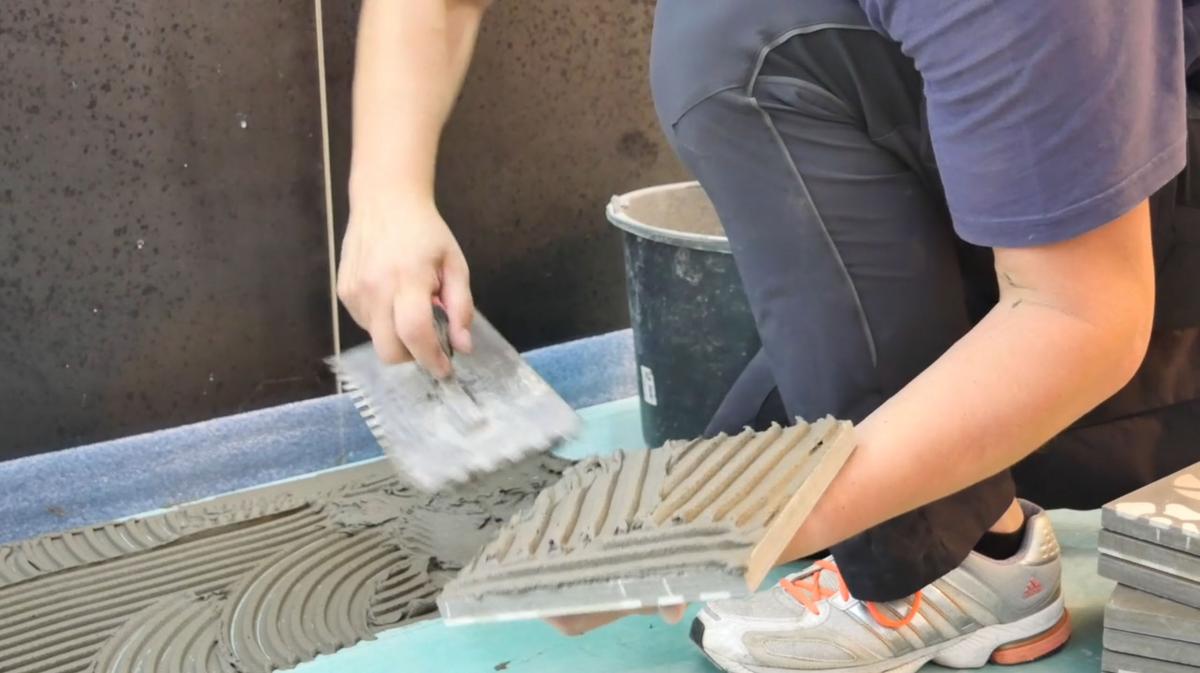
Laying cement mosaic tiles
Here, VIA master tiler Oliver Grimm shows you how to lay VIA cement mosaic and terrazzo tiles. From preparation and mixing the VIA tile adhesive to laying using the buttering-floating method, he shows you every step required to achieve a perfect result. This video is also informative for builders and architects.
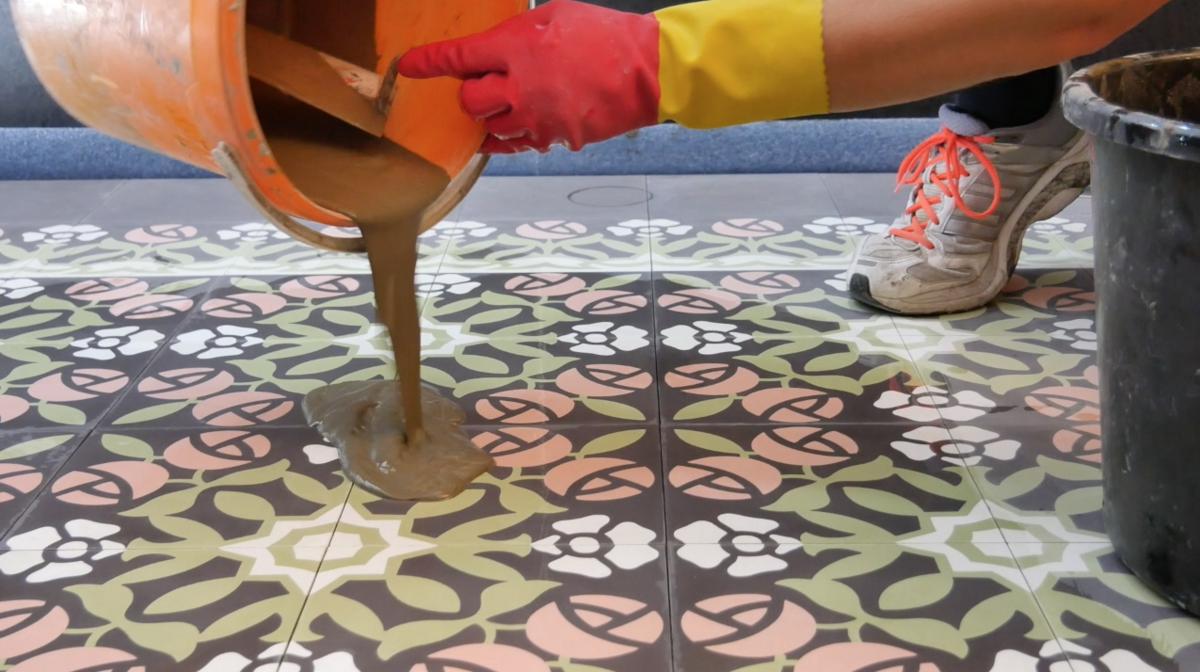
Grouting and impregnating cement mosaic and terrazzo tiles
VIA application engineer and master tiler Oliver Grimm shows you how to grout and impregnate VIA tiles.
You can follow the work process step by step here.
Please note that the times given are approximate and may vary depending on the ambient conditions.
Watch the video

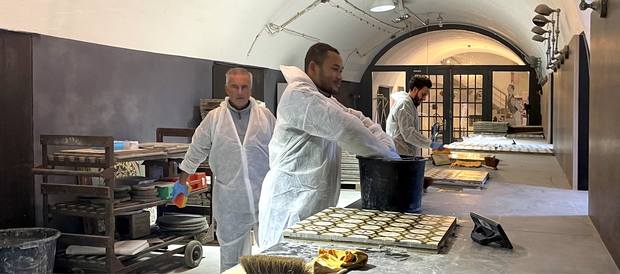
Laying seminars
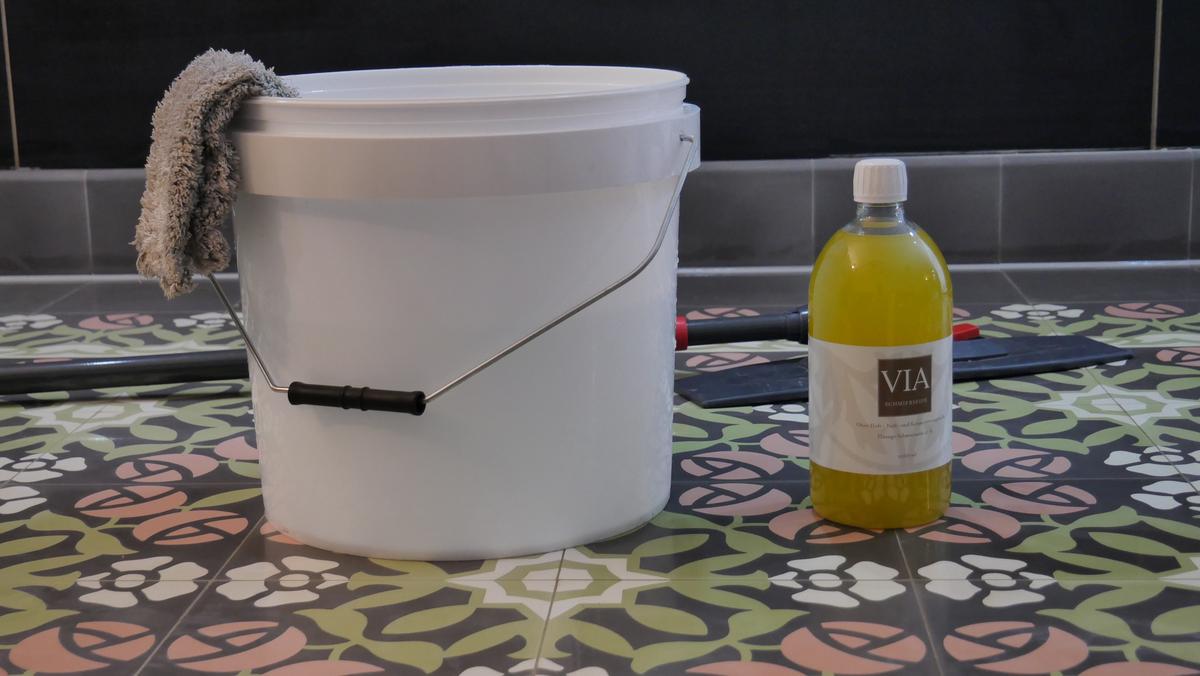
VIA offers regular one-day seminars in Bacharach for LAYING, GROUTING and IMPREGNATING. Professionals explain the properties and active processing of VIA tiles step by step.
Cement mosaic and terrazzo tiles are traditionally laid with very narrow joints. We will show you how to do this.
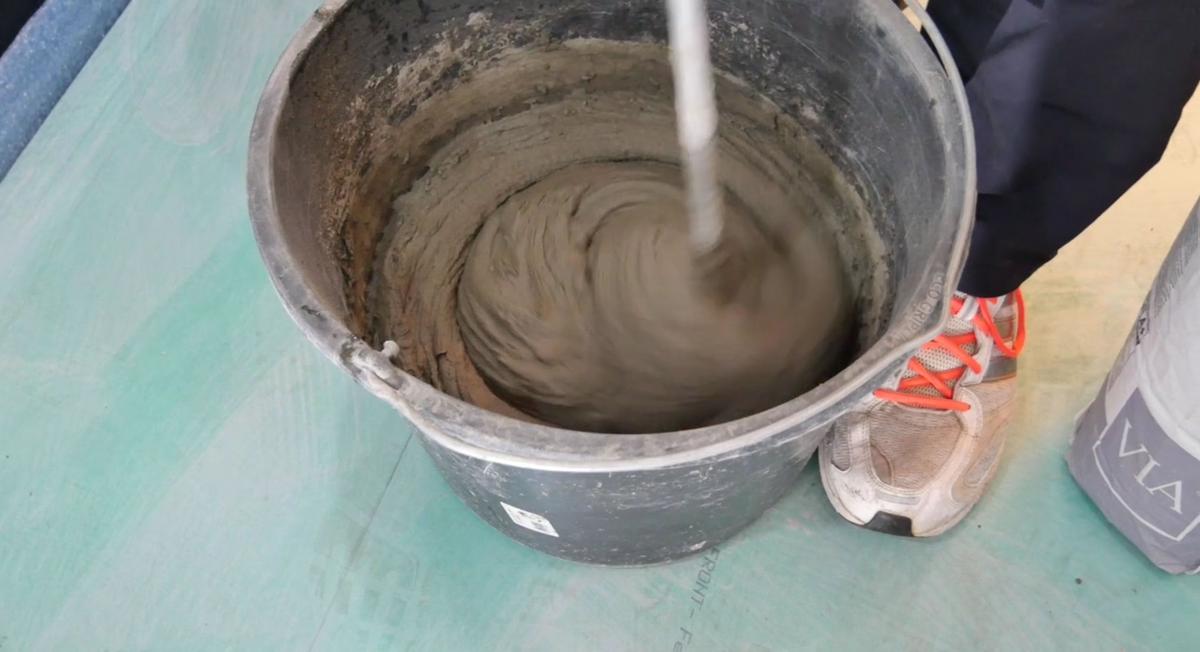
Preparation
The exact room dimensions are checked again and the laying angle is determined.
Mix the appropriate amount of adhesive according to the instructions on the VIA board adhesive packaging. The VIA tile primer binds the residual dust and reduces the absorbency of highly absorbent substrates. For cement screeds, the primer is diluted with water in a ratio of 1:3; for calcium sulphate substrates, it must be applied undiluted.
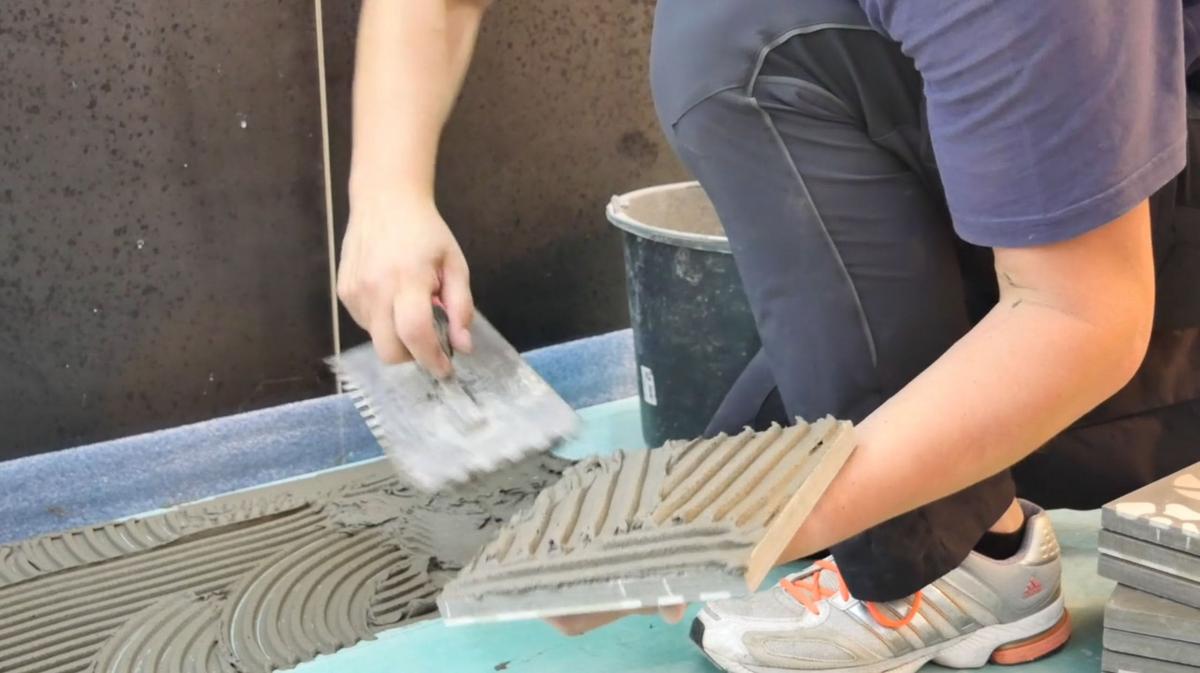
The installation
The adhesive is applied to the floor/wall and board using a 10-tooth trowel. This ensures that the adhesive is thick enough to achieve an even surface without overlapping when pressed down. It is essential to use the buttering-floating method.
Cement mosaic and terrazzo tiles are traditionally laid with the smallest possible joint width. This ensures that a flat covering is created and patterns are emphasised without a disruptive joint pattern and the edges protect each other.
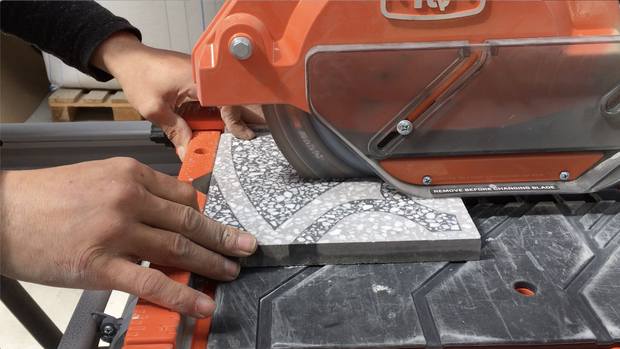
Align the tiles carefully to avoid overlapping. Cuts must be made dry with a diamond blade. Mitres can also be cut precisely when dry, so that clean joints, e.g. on outer edges, are also possible.
It is important that the boards are cut dry to prevent moisture from being absorbed. Only measure and dry cut the slabs to be cut in the edge area after the centre pattern has been laid.
Of course, the freshly laid covering must not be washed off with water.
Only VIA tile adhesive should be used for laying VIA tiles.
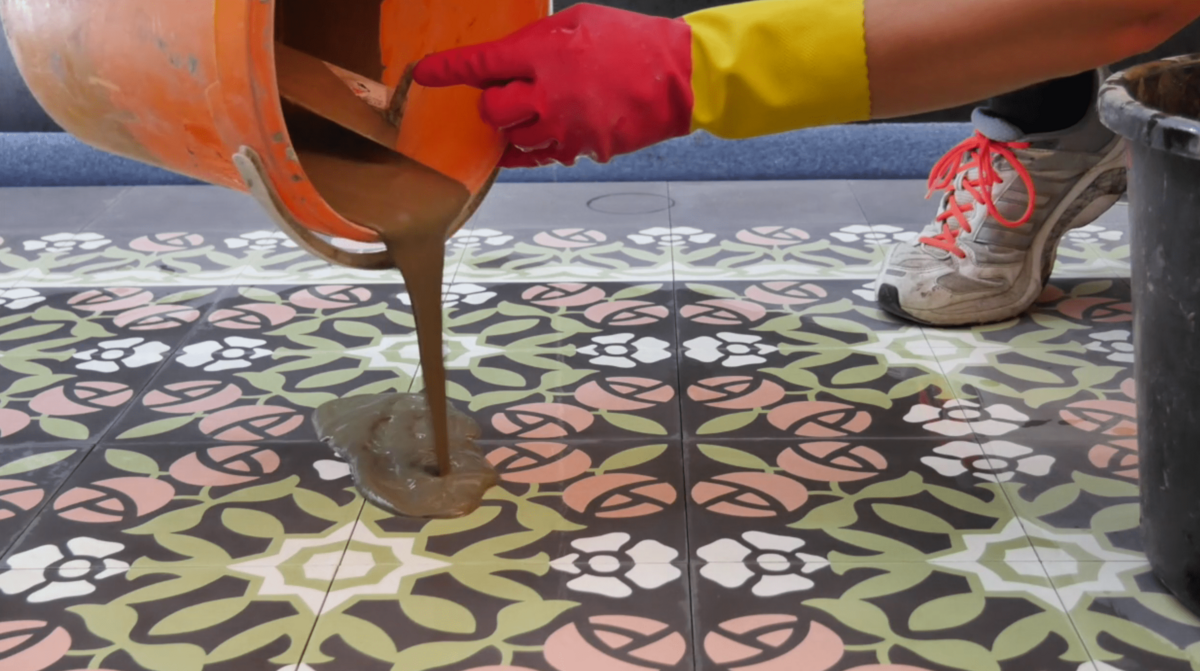
Grouting
The grout is made from two parts trass cement and one part quartz sand with the addition of water to a yoghurt-like consistency and applied to the swept tile floor.
Grouting should only be carried out after the tiles have dried out so that the shrinkage does not cause the edges to crack.
The grout mortar is pressed into the joints using a joint board. Work in the jointing mortar until the joint no longer falls, i.e. the mortar fills the joint completely.
Please note:
Do not use ready-made grouts that contain plastic, as they could lead to a grey haze.
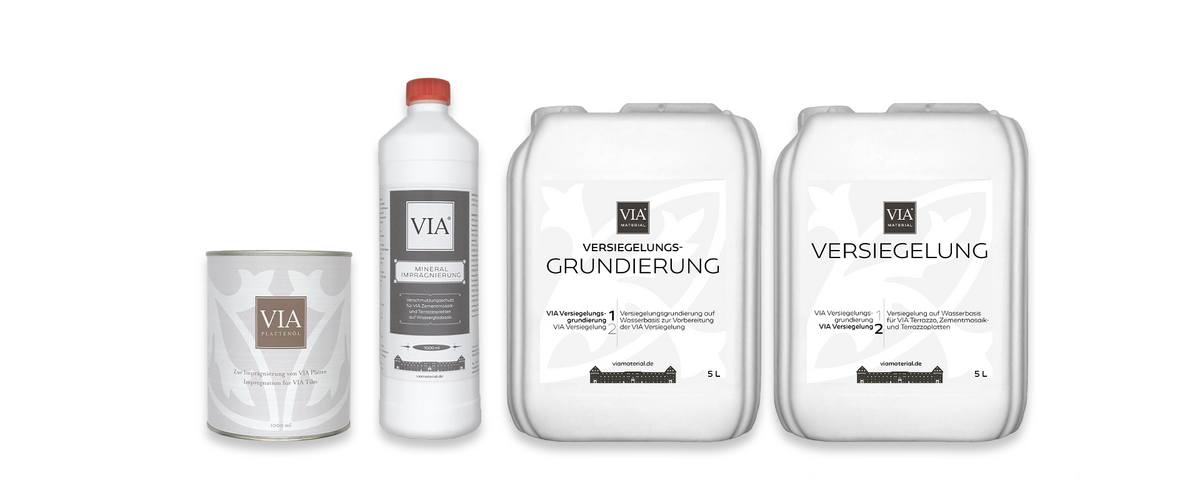
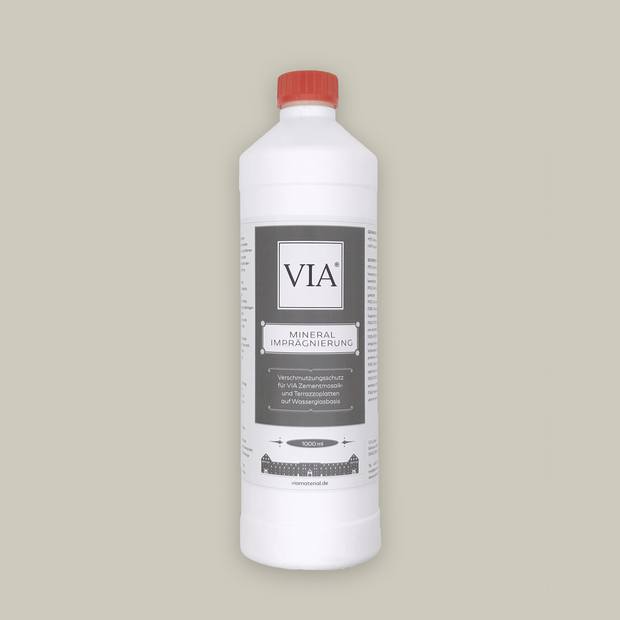
VIA mineral impregnation
VIA Mineral Impregnation is a water-based impregnation based on water glass.
It can simply be applied crosswise with a floor wiper. The water glass reacts with the lime in the flooring and forms crystalline structures - the surface becomes silicified and therefore more resistant.
Properties:
- Low viscosity, penetrates deep into the surface
- Leads to a slight colour deepening ("accentuation")
- Mineral, diffusion-open surface
- Protects against soiling, but not acid-resistant
Acid resistance can only be achieved with the VIA sealer.
The effect corresponds to the treatment of natural stone or open-pored materials such as marble, travertine or terrazzo.
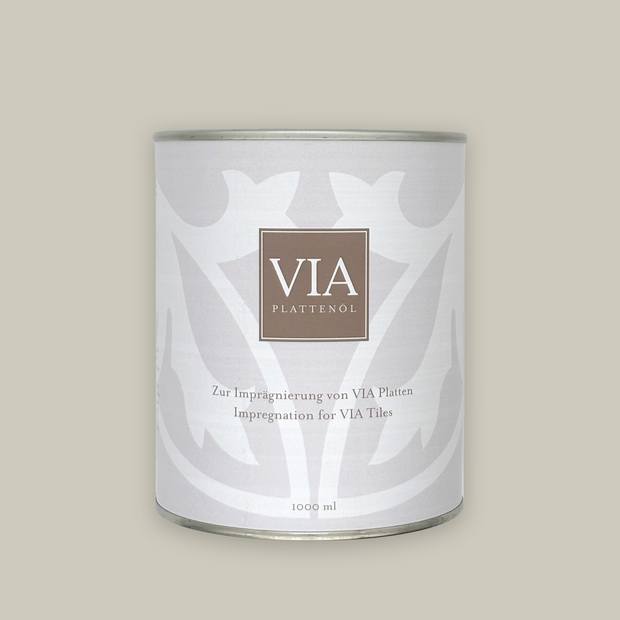
VIA panel oil
The VIA tile oil penetrates deep into the capillaries of the cement mosaic tile and hardens strongly.
It effectively closes the pores and emphasises the natural colour of the surface.
Properties:
- Long-lasting, colour-deepening surface protection
- Low solvent content - requires careful application
- Not acid-resistant (sealing is required for areas exposed to acids)
Not suitable for VIApur tiles as it changes their colour tone considerably.
For light-coloured, white or textured surfaces, VIA Mineral Impregnation is recommended instead.
Application:
Apply the oil thinly and evenly with a foam roller, then polish in immediately with a polishing machine.
Flooring must be dry, clean and dust-free - do not wipe with a damp cloth before oiling.
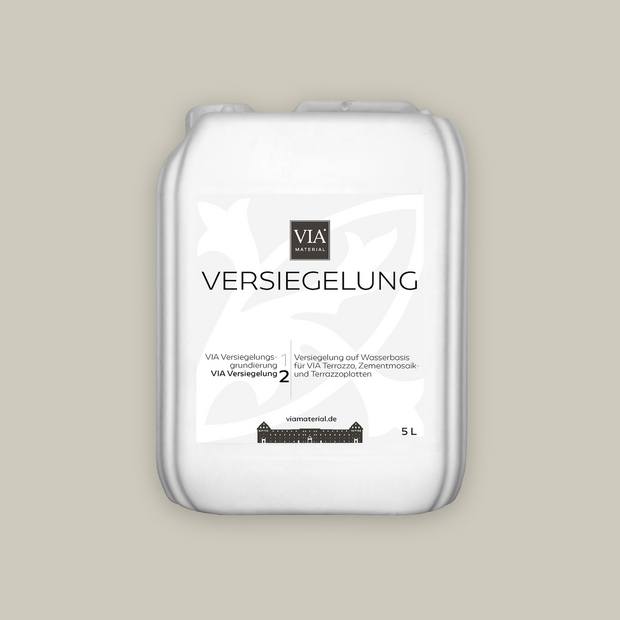
VIA Sealing
The VIA sealer is a resistant surface coating for heavily used or acidic areas.
It forms a closed protective layer and completely separates the lime of the board from acidic substances.
Application:
Roll onVIA Sealing Primer
After approx. 3 hours, apply VIA sealing coat
Material consumption: 100-120 ml/m² (approx. 8-10 m²/litre)
Sealed sample boards and terrazzo samples can be provided on request.